5 min read
Bicycle Cost-Driver Buyer Route Before Quote Comparison
Many bicycle buyers ask the wrong first question.
They ask for the best price before they know what is actually creating the price.
For export-oriented bicycles and e-bikes, cost does not move from one factor alone. It moves from platform choice, component grade, battery or drive-system assumptions, packaging rules, compliance scope, order volume, and how far the buyer is asking the factory to move away from an existing production platform.
If those drivers are not separated, the quote looks comparable while the scope is not.
The Short Answer
Before comparing bicycle prices, break the quote into eight cost drivers:
- frame platform and geometry
- component level and protected parts
- battery, motor, and electrical system where relevant
- customization depth
- packaging and accessory configuration
- testing, compliance, and documentation
- MOQ, tooling, and production planning
- freight and shipment assumptions
The buyer does not need every detail on day one.
The buyer does need enough detail to stop suppliers from quoting different products under one headline price.
Platform Cost Comes First
The biggest cost mistake is treating every bicycle as if it starts from zero.
Most workable sourcing starts from a real platform:
- commuter city platform
- folding platform
- pedal-assist platform
- cargo-light utility platform
- regional distributor spec platform
When the buyer works close to an existing platform, cost usually stays more stable. When the buyer asks for geometry, bracket, mount, electrical, or fold-structure changes beyond the base platform, cost risk rises fast.
Component Mix Changes The Quote More Than Buyers Expect
Two bicycle quotes may share the same frame image and still land far apart because the component assumptions differ.
Check:
- transmission level
- braking system
- wheelset and tire positioning
- cockpit parts
- saddle and seatpost
- lighting or display pack
- charger, battery lockset, or accessory kit where relevant
If one supplier quotes a protected component and another swaps to a house alternative, the price gap may look attractive while the real product changes.
Battery And Electrical Costs Must Be Isolated
For e-bikes, battery and electrical assumptions can distort the whole quote.
Review separately:
- cell tier
- battery capacity
- battery housing style
- charger spec
- display type
- controller position
- motor brand and torque band
- wiring and connector approach
This is why “same spec” e-bike quotes often are not the same at all.
Customization Depth Decides Whether The Quote Is Production Or Development
Many small orders become expensive because the buyer is really asking for development work while expecting platform pricing.
Clarify whether the request is:
- cosmetic branding only
- component swap on an existing platform
- accessory pack adjustment
- packaging change
- electrical-system change
- frame tooling or mold-related change
That one distinction can decide whether the order stays commercial or turns into an unstable low-volume development project.
MOQ And Tooling Pressure
Low MOQ does not automatically mean low commitment.
Cost pressure often rises when:
- one color is broken into too many small runs
- component protection is too specific for the volume
- carton art changes are too fragmented
- branding parts require new tooling or new minimums
- battery or drive-system sourcing loses scale efficiency
Ask early which parts trigger extra minimums and which ones can stay on a standard platform.
Packaging Is A Real Cost Driver, Not A Footer Line
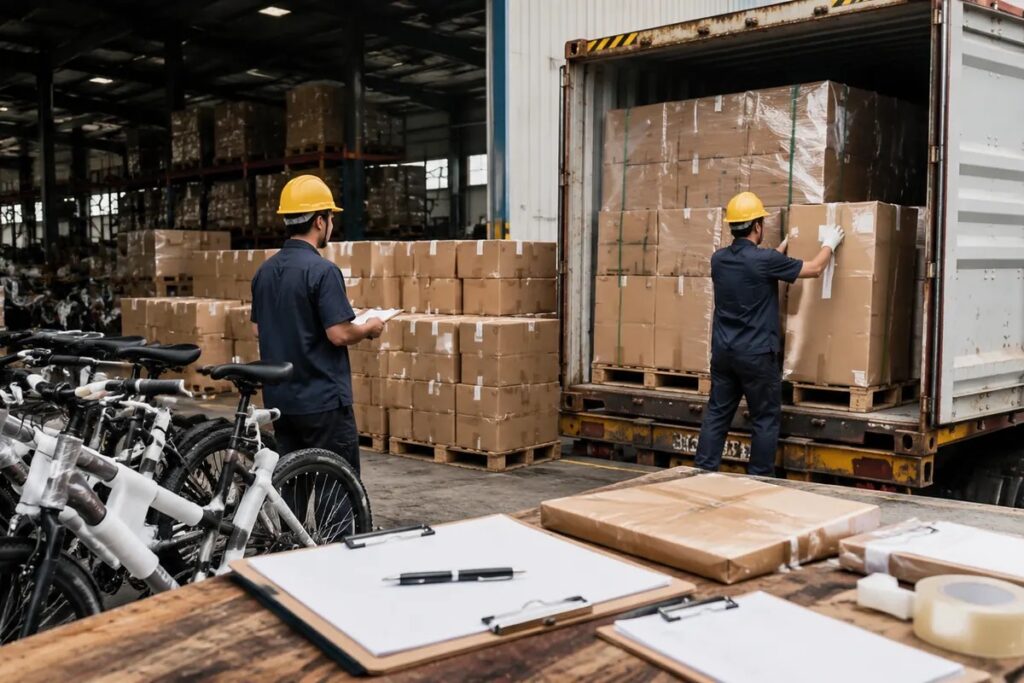
Export bike programs absorb cost through packaging faster than many buyers expect.
Review:
- carton size
- wheel and handlebar packing state
- inner protection
- accessory box count
- label requirement
- drop-test expectation
- whether the program is e-commerce, distributor, or retail-floor oriented
If the packaging method changes late, the landed cost changes with it.
Compliance And Document Scope
Compliance is not only a legal issue. It is a quote issue.
Costs may move based on:
- battery documentation
- charger approvals
- label content
- origin marking
- test reports
- regional market packaging marks
- warning materials
When suppliers are vague here, the first quote often hides later add-ons.
Freight Assumptions Can Distort Factory Price Comparisons
Some quotes look cheaper because the shipment assumptions are lighter.
Check whether the price assumes:
- different carton density
- lower accessory count
- less inner protection
- incomplete spare-part pack
- different Incoterm
- different loading efficiency
A better freight result sometimes comes from a slightly higher ex-factory cost with better packing logic.
Anonymous Case Fragment
A distributor program compared several folding e-bike quotes and picked the lowest headline price.
Later review showed the cheapest quote used a weaker battery position, lighter carton protection, and a narrower accessory scope than the other offers. Once those were normalized, the “cheap” quote was not actually cheaper in working terms.
The next round split the review into:
- platform cost
- battery and drive-system cost
- packaging cost
- compliance and document scope
The quote discussion became slower for one day and much cleaner for the next three weeks.
What Buyers Should Send Before The First Quote Round
Send these points first:
- target market
- annual or opening quantity
- use case
- platform reference
- protected components
- whether the program is bike or e-bike
- packaging route
- shipping term expectation
That is how the supplier knows what must stay fixed and what can be priced flexibly.
Buyer Checklist Before Comparing Bicycle Quotes
Before treating bicycle quotes as comparable:
- Confirm the real platform being quoted.
- Separate component assumptions from frame assumptions.
- Isolate battery and electrical cost for e-bike projects.
- Check whether the request is production or development.
- Review MOQ, tooling, and fragmentation pressure.
- Normalize packaging and freight assumptions.
- Confirm compliance and document scope.
If those layers are still mixed together, the quote is still a guess.
FAQ
What is the biggest bicycle sourcing cost driver?
The base platform is usually the first driver, because geometry, structure, and compatibility decisions affect many later component and packaging choices.
Why do similar bicycle quotes still vary so much?
Because suppliers may quote different component tiers, battery systems, packaging rules, accessory scope, or compliance assumptions under one similar product image.
Does low MOQ always reduce total sourcing risk?
No. Low MOQ can increase cost pressure when customization, battery specificity, or packaging fragmentation remove the factory's scale efficiency.
Why should battery cost be reviewed separately?
Because battery capacity, cell tier, housing, charger, controller, and documentation can change the quote significantly without obvious changes in the model image.
What should a buyer send before asking for bicycle prices?
The buyer should send the target market, platform reference, protected components, program volume, packaging route, and whether the model is bike or e-bike.
Send the current bicycle or e-bike brief, target market, and blocked quote issue on WhatsApp before the next supplier round.
References
- U.S. Consumer Product Safety Commission bicycle requirements overview – https://www.cpsc.gov/Business–Manufacturing/Business-Education/Business-Guidance/Bicycles
- U.S. Customs and Border Protection informed compliance publications – https://www.cbp.gov/trade/rulings/informed-compliance-publications