8 min read
China To USA Shipping Cost Buyer Route For DTC Brands
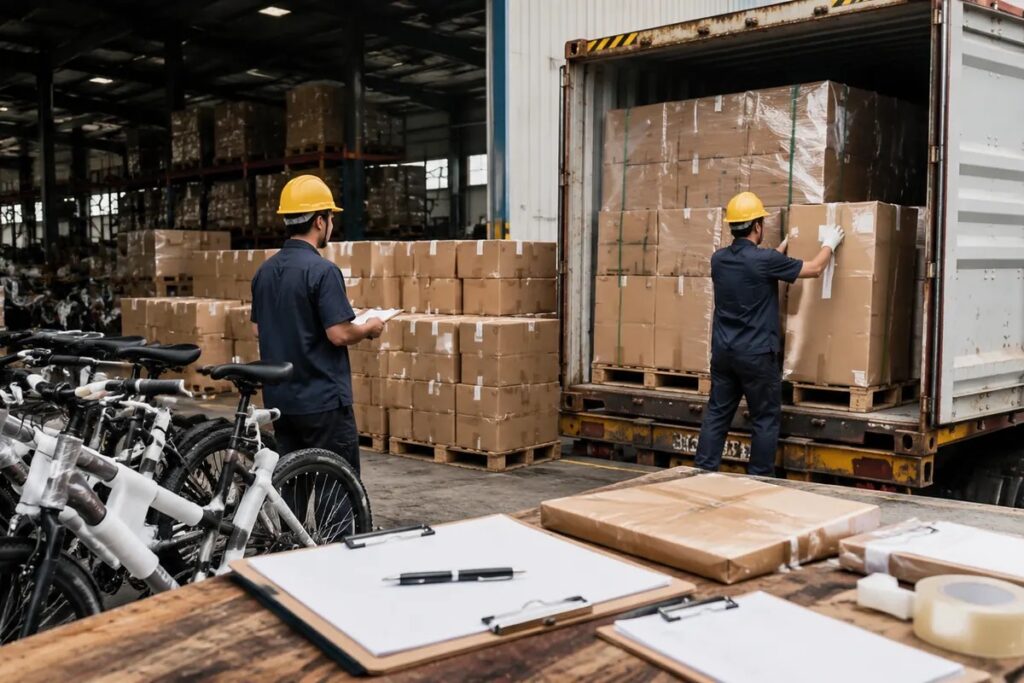
Most DTC teams do not lose margin because they forgot to negotiate the ocean freight rate. They lose margin because they treat freight as the whole landed cost.
That mistake works for one test shipment. It breaks when the brand starts buying in repeat purchase orders, splitting inventory between 3PLs, moving from parcel to palletized delivery, or selling through multiple channels with different return and storage patterns.
A better question is not, “What is the shipping cost from China to the USA?” The better question is:
What is the fully loaded cost to move one sellable unit from factory release to a U.S. customer-ready inventory position?
This article gives DTC founders and operators a practical audit structure before scaling purchase orders.
The Short Answer
Your China-to-USA shipping cost should be audited in seven layers:
- Factory release cost
- Origin handling and export documentation
- International freight
- Cargo insurance
- Customs entry, duty, and user fees
- U.S. port, exam, drayage, and domestic freight
- 3PL receiving, storage, pick-pack, and returns
If your cost model only has product cost plus freight, it is not ready for scale.
Landed Cost Is Not The Same As Freight
Freight is the price paid to move cargo. Landed cost is the total cost required to make the product available for sale in the target market.
For a DTC brand importing from China to the United States, a useful landed-cost formula is:
Unit landed cost =
factory unit cost
+ export packing
+ origin local charges
+ international freight
+ marine insurance
+ customs broker and entry fees
+ duty and applicable import fees
+ exam, demurrage, detention, or storage risk allowance
+ destination drayage or domestic freight
+ 3PL receiving and inbound handling
+ expected damage and return allowance
The purpose of the audit is not to make the number perfect. The purpose is to make the number honest enough for pricing, cash planning, and supplier decisions.
Cost Layer 1: Factory Release Cost
Many DTC teams compare supplier quotes on unit price only. That misses three common cost traps:
- Different Incoterms
- Different carton specifications
- Different included accessories, spare parts, manuals, labels, and retail packaging
A quote of $18.40 FOB Ningbo and a quote of $17.90 EXW Tianjin are not directly comparable. One supplier may include export handling and carton marking. The other may not. One may quote a stronger carton that reduces damage claims. The other may quote a cheaper carton that shifts risk downstream.
Before comparing factories, normalize every quote into the same terms:
- Incoterm
- Port or pickup location
- Carton size and gross weight
- Palletization requirement
- Minimum order quantity
- Included testing or inspection
- Payment term
- Lead time after deposit
The cheapest quote is often just the quote with the most missing assumptions.
Cost Layer 2: Origin Handling And Export Documentation
Origin charges are easy to ignore because they rarely appear in the supplier’s headline unit price. They may include local trucking, warehouse receiving, terminal handling, customs declaration, document fees, and consolidation handling.
The audit question is simple:
Who is responsible for the cargo before it is loaded for international movement, and which charges are already included?
For smaller DTC brands, origin handling becomes especially important when multiple suppliers are combined into one shipment. A carton from one factory may be ready on Monday, another supplier may be late by eight days, and the consolidation warehouse may start charging storage. That delay becomes a hidden cost of supplier coordination.
Cost Layer 3: International Freight
International freight can be ocean, air, express, rail-plus-ocean, or a hybrid service. The best choice depends on volume, margin, urgency, and inventory risk.
Use these rules of thumb:
- Use express only for samples, replacement parts, urgent launch units, or very high-margin small goods.
- Use air freight when stockout risk is higher than the freight premium.
- Use LCL ocean when order volume is not enough for a full container but timing is flexible.
- Use FCL ocean when replenishment volume is stable and you can control receiving appointments.
Do not compare freight quotes without checking:
- Transit time range, not just fastest estimate
- Included origin and destination charges
- Whether customs brokerage is included
- Whether final delivery is to port, warehouse, Amazon, or 3PL
- Chargeable weight versus actual weight for air
- Cubic meters and carton dimensions for ocean
For DTC planning, freight should be modeled as a range, not a single number.
Cost Layer 4: Cargo Insurance
Cargo insurance is often skipped on early orders because the premium looks small and the paperwork feels optional. That is the wrong way to decide.
The audit question is:
If this shipment is delayed, damaged, lost, or partially rejected, what is the financial exposure?
For seasonal DTC products, the bigger exposure may not be the cargo value. It may be missed launch timing, emergency replenishment, ad spend waste, or customer service load. Insurance will not solve every operational problem, but the decision should be explicit.
Cost Layer 5: Customs Entry, Duty, MPF, And HMF
For U.S. imports, the product’s HTS classification drives duty exposure. CBP guidance points importers to the Harmonized Tariff Schedule as the basis for applicable duty rates and statistical categories. The correct classification should be confirmed with a customs broker or binding ruling when risk is material.
There are also user fees. As of CBP’s fiscal year 2026 guidance, the Merchandise Processing Fee for formal entries is assessed at 0.3464% of the value of imported goods, excluding duty, freight, and insurance, with minimum and maximum amounts. Ocean imports can also involve Harbor Maintenance Fee exposure, commonly modeled at 0.125% for qualifying commercial cargo.
The practical point for DTC operators is not to memorize every fee. It is to stop putting a single “duty” line in the model when the shipment actually has classification, duty, MPF, HMF, broker, bond, and entry-handling questions.
Your audit should capture:
- HTS code by product
- Country of origin
- Declared value logic
- Duty rate and additional trade remedy exposure
- Broker fee
- Bond requirement
- MPF and HMF assumptions
- Responsible importer of record
- Required certificates or agency rules
If your factory, freight forwarder, and broker are not aligned on these assumptions before booking, the brand is carrying avoidable risk.
Cost Layer 6: U.S. Port, Exam, Drayage, And Domestic Freight
Destination costs can swing unexpectedly:
- Customs exam
- Port congestion
- Demurrage
- Detention
- Chassis shortage
- Missed delivery appointment
- Drayage re-delivery
- Residential or liftgate delivery
- Amazon or 3PL appointment delay
These are not normal “unit costs”, but they are real costs. A scaling DTC brand should create a risk allowance based on shipment history and product criticality.
For example, if a stockout would force emergency air freight, a slower but cheaper ocean route may be false economy. If a 3PL has strict receiving windows, a cheaper drayage option with poor appointment reliability may create more downstream cost than it saves.
Cost Layer 7: 3PL Receiving, Storage, Pick-Pack, And Returns
The final cost layer is often outside the sourcing team’s spreadsheet, but it determines customer-ready cost.
Check these fields:
- Carton labeling requirement
- Pallet spec
- Master carton quantity
- Receiving fee
- Storage fee
- Pick-pack fee
- Kitting or bundling cost
- Returns inspection
- Damage write-off
- Disposal fee
This is where product design and packaging decisions become logistics costs. A beautiful retail box may increase damage resistance, improve unboxing, and reduce returns. It may also increase dimensional weight and storage cost. The audit should make that tradeoff visible.
Anonymous Case Fragment
A home goods DTC brand was preparing to scale a repeat product after a strong launch. Their supplier quote looked stable, and the forwarder offered a lower ocean rate. On paper, margin looked healthy.
The problem was that the quote comparison excluded three items: upgraded export cartons requested by the 3PL, destination drayage to a non-port warehouse, and a realistic receiving fee for mixed-SKU cartons.
After rebuilding the landed-cost model by SKU and carton configuration, the brand found that two lower-priced SKUs were actually dragging blended margin down. The fix was not changing factories. The fix was consolidating carton specs, changing order quantities by SKU velocity, and renegotiating receiving rules with the 3PL.
The landed-cost audit did not reduce every line item. It showed which costs were worth reducing.
A 30-Minute Audit You Can Run This Week
Use this quick check before your next PO:
- Pull the last three supplier quotes and put them into the same Incoterm.
- Add carton dimensions, gross weight, and units per carton for every SKU.
- Ask your forwarder to quote the same shipment under at least two routing options.
- Ask your broker to confirm HTS, duty, MPF, HMF, and required entry documents.
- Ask your 3PL to confirm receiving, storage, and labeling requirements before production starts.
If any one of those five steps cannot be completed, the shipment is not fully costed.
FAQ
What is the biggest hidden cost in China-to-USA shipping for DTC brands?
The biggest hidden cost is usually not the freight rate. It is the combination of incorrect landed-cost assumptions, poor carton data, customs surprises, destination fees, and 3PL receiving costs that were not modeled before purchase order approval.
Should a DTC brand use FOB or EXW when buying from China?
FOB is usually easier to compare across suppliers because export-side responsibilities are clearer. EXW can work, but only if the brand or forwarder has reliable local pickup, export handling, and documentation control.
How should I estimate customs duty?
Start with the correct HTS classification, country of origin, and declared value logic. Then confirm with a licensed customs broker or request a ruling if the classification risk is material. Do not rely only on a supplier’s HS code.
Is air freight ever worth it?
Yes, but it should be tied to a business case such as preventing stockout, supporting a launch, replacing defective units, or moving high-margin lightweight goods. It should not become the default fix for weak production planning.
When should I hire a supply chain consultant?
Hire support when the brand is approving larger POs, moving from one-off shipments to repeat replenishment, adding multiple suppliers, or seeing margin erosion that cannot be explained by product cost alone.
Next Step
Send the current supplier, quote, packaging photo, or shipment issue on WhatsApp if you want the buyer-side control sheet tightened before the next PO or shipment release.
Sources Checked
- CBP: Tips for New Importers and Exporters –
https://www.cbp.gov/trade/basic-import-export/importer-exporter-tips - CBP: Harmonized Tariff Schedule guidance –
https://www.help.cbp.gov/s/article/Article-1104?language=en_US - CBP: Merchandise Processing Fee guidance –
https://www.help.cbp.gov/s/article/Article-1128?language=en_US - CBP bulletin references for Harbor Maintenance Fee –
https://www.cbp.gov/bulletins/43genno51.pdf